
Parar un momento
by
Andrea Torres Viedma
Proyecto financiado
por Fondart,
convocatoria 2020
Parar Un Momento
Parar un momento is a research project that proposes a dance improvisation practice focused on the action of parar, a Spanish verb meaning both ‘to stop’ and ‘to stand up/build up’. Situated in relation to the Chilean context, the practice explores the potential of parar to unfold experiences of time otherwise, in response to dominant colonial–neoliberal temporal logics characterised by time poverty, acceleration, linearity, and rupture with the past.The practice approaches parar both as an action that interrupts these dominant temporal logics and as a way of building up other experiences of time through encounters and movement with others.In this sense, parar is proposed as an everyday practice of taking the time to move together, exploring the embodied and political potential of stopping and building up through dance, and the temporal possibilities that emerge through this practice.
Parar un momento
by
Andrea Torres Viedma
Contexts
The project officially began with my doctoral studies; however, the interest had been emerging before then, particularly since becoming a mother, when sustaining my work in dance became even more difficult. The precarity commonly associated with this field, understood primarily in economic terms, also became increasingly visible to me as a temporal issue. I wanted to have more time both for motherhood and for dancing, but this was extremely challenging.During my doctoral studies, these temporal concerns became a focus of the research and were painfully reinforced by the contexts through which it unfolded. The estallido social in Chile brought a multidimensional crisis to the fore, prompting questions about the neoliberal model established over recent decades and its entanglement with longer histories of colonialism. The curfews and extreme repression that accompanied this period also directly affected the project.The subsequent COVID-19 pandemic further deepened this critical context. Restrictions on gatherings and physical proximity threatened the very conditions through which dance improvisation could take place, requiring the research to be significantly reconfigured. Although these circumstances delayed the project, they also allowed it to develop greater depth.Within these intertwined contexts, the project stopped and built itself up in their midst, making the action of parar not only the focus of the research, but also a central aspect of the process through which it evolved.
Parar un momento
by
Andrea Torres Viedma
The Project
Parar un momento adopts a Practice-as-Research (PaR) methodology through which artistic practice is approached as a legitimate mode of enquiry. Rather than separating theory from practice, this approach articulates embodied experience and critical reflection, placing them at the centre of the research, allowing pauses, shifts and unexpected directions to become constitutive parts of the process. The need to think through the body and through the time lived during the research made this methodology particularly suited to the way the project unfolded.At the heart of the research is the devising of an improvisation practice focused on the action of parar. Its development, exploration and revision therefore constitute fundamental components of the project. The practice took shape through a series of encuentros (translated into English as ‘encounters’). In Spanish, encuentro evokes both meeting and finding. Within the practice of parar, it refers to coming together to improvise and to the possibility of finding something through the practice itself—something that unfolds through moving and parar together.The project was developed primarily with three dance collectives based in three cities in Chile. Members of the wider dance communities in these cities also participated in the later stages of the encuentros.Encounters with the groups
These encounters focused on exploring and developing the practice through cycles of improvisation. Originally intended as an intensive, face-to-face process over a two-week period, they were adapted in response to the COVID-19 pandemic. They took place virtually via Zoom, mostly with each group separately and at times with the groups coming together. They ultimately unfolded over almost two years (2020–2022).Open encounters
These in-person encounters offered an opportunity to share the practice with local communities in the three cities where the groups were based. The project included one encounter in each city, all taking place in March 2023 and each lasting two hours.
Open encounters - Puerto Montt


Photos: Jose Rojas Navea
Open encounters - Coquimbo
While the group was based in La Serena, the Open Encounter took place in the neighbouring city of Coquimbo.


Photos: Jose Rojas Navea
Open encounters - Santiago


Photos: Jose Rojas Navea
Parar un momento
by
Andrea Torres Viedma
Participants
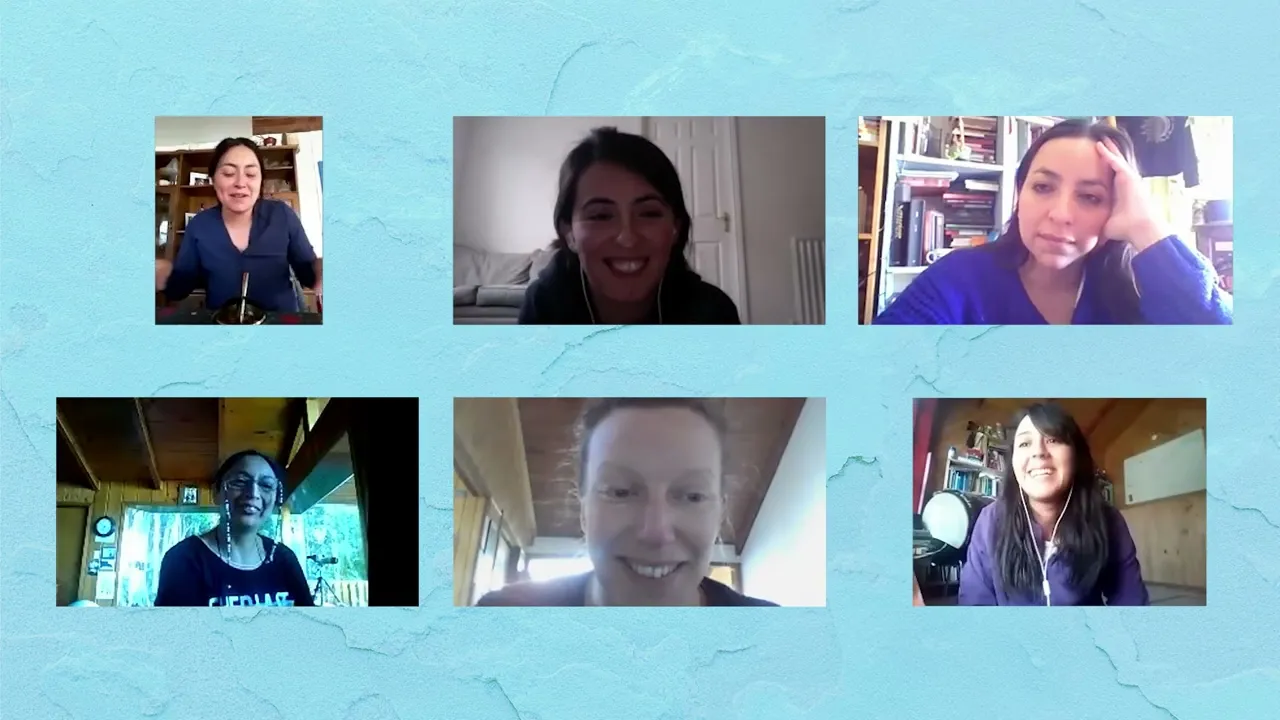
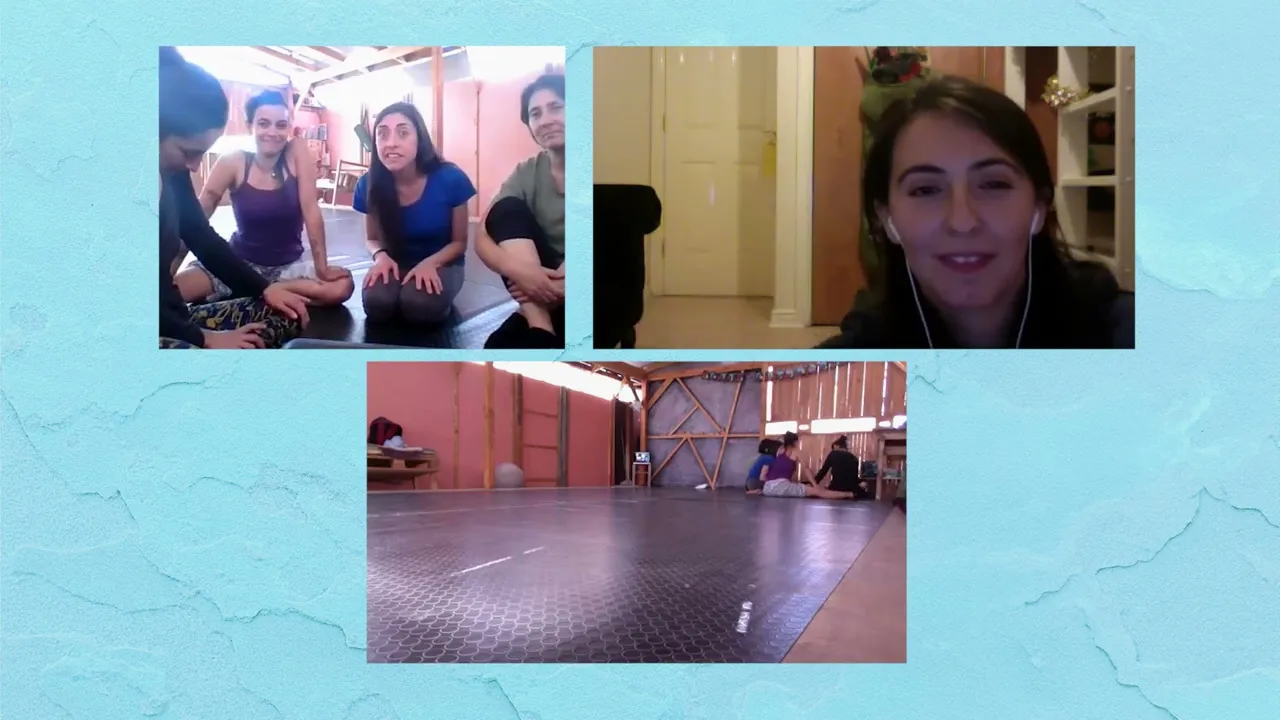
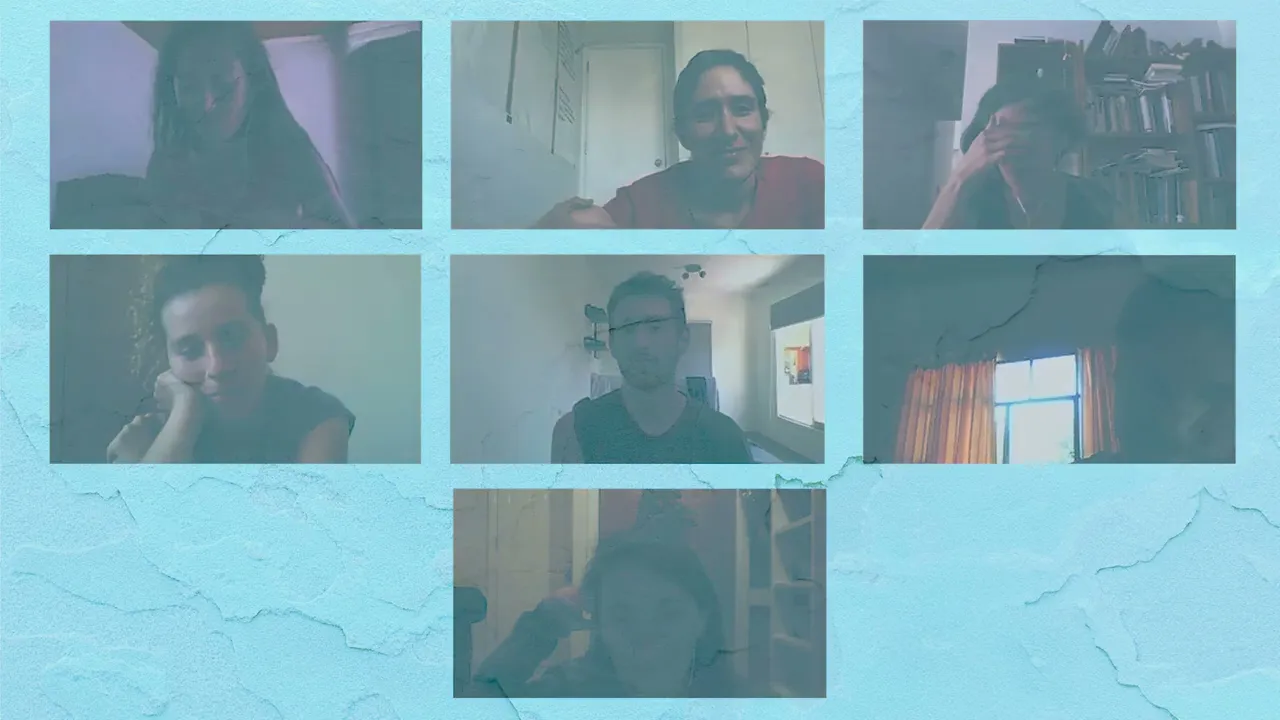
The project has involved the participation of three dance groups working in three cities in Chile.These groups and their members have developed significant work in contemporary dance and movement practices over many years, becoming important points of reference within their respective territories. Their members work across performance, teaching, research, artistic creation and mediation, often extending their work beyond the groups themselves and contributing to the wider development of dance and the performing arts in Chile.The groups have also opened their practices to their communities through workshops, open creative processes, performances in conventional venues and public spaces, and, in some cases, dance actions within political contexts. Through these activities, they generate and share knowledge while sustaining situated and community-based forms of encounter, relation and learning through dance, contributing to a diverse, critical and continually evolving dance scene in Chile.A glimpse into the richness of these groups’ trajectories, the strength of the relationships they have built through dance, and some of the difficulties they have faced along the way can be found in the videos below. These videos were edited from conversations sparked by an invitation I shared with each group during our first encounter:Proposition
Remember and recount your history together.
Compañía Danza Reverso
Puerto Montt
Carolina Contreras Gonzalez, Patricia Cuyul Vargas, Paulina Aburto Saldivia, Julia Björkström, Verónica Arellano Pino.
Colectiva de Danza La Manada
La Serena
Natalie Gutiérrez Marín, Daniela Reinoso Olmos, Rayén Pojomovsky Aliste, Amaya Aristegui Muñoz.
Núcleo Contacto Improvisación Universidad de Chile
Santiago
Consuelo Cerda Monje, Poly Rodríguez Sanhueza, Javiera Sanhueza, Darío Yovane Ballas, Carlos Vera Rojas, Soledad Medina.
Parar un momento
by
Andrea Torres Viedma
Who I Am
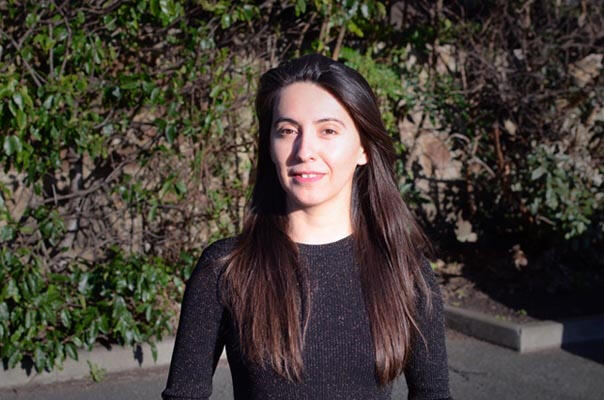
My name is Andrea Torres Viedma and I am a dance artist from Chile, based in Scotland. My practice has developed across these territories, combining dance, choreography and research. I often collaborate with other artists, with a particular interest in the somatic-political dimensions of moving together. My work is grounded in Practice-as-Research and adopts a decolonial feminist approach from the South. I think through dance and embodiment while simultaneously rethinking these very notions, attending to the traces and transience that shape my practice as a migrant artist.Parar un momento is connected to my own experiences of dance, time, migration and motherhood. The project is situated in relation to Chile but took shape during my doctoral studies in the UK. Developing the research from outside Chile involves contradictions that I do not seek to resolve. Instead, I inhabit these tensions, attending to the different places, experiences and ways of knowing that coexist within my practice. From this position, I approach dance as a situated and embodied way of researching, questioning and generating knowledge.I am currently a PhD candidate in Dance Studies at the University of Roehampton. I hold an MFA in Creative Practice from Trinity Laban Conservatoire of Music and Dance, a BA (Hons) in Dance from the University of Chile, and a Postgraduate Certificate in Foundations for Contemporary Critique for Performing Arts, also from the University of Chile.
See more of my work on my personal Instagram account.
Parar un momento
by
Andrea Torres Viedma
The Practice
The title of the project, Parar un momento, is an everyday expression used in Chile to mean ‘to stop for a moment’. However, through the double meaning of parar as both stopping and standing up/building up, in this project the phrase also suggests the possibility of building up a moment. This resonates with the etymology of momento: while the word commonly refers to a brief period of time, it traces back to the Latin momentum, associated with movement, motion and change. In the practice devised through this project, the practice of parar, a moment is approached not simply as a brief point in time, but as something that can emerge and expand through the interplay of movement and parar: an embodied, situated and relational temporality that unfolds through moving and parar together.The practice proposed in this project draws on meanings associated with the action of parar within the Chilean context—both stopping and standing up/building up—and is organised through cycles of improvisation.These cycles explore temporal entanglements through overlapping rhythms and orientations that not only move forwards, but also return, slow down and stop. In this way, the practice unfolds through multiple temporal experiences rather than following a single linear progression.There are three cycles organised as parar, compartir and retornar. Each one of these cycles involves a number of phases that complement the exploration throughout the practice.The cycles do not operate in isolation but interdependently, and they seek to create conditions for taking time. Here, taking time draws on two meanings situated in the Chilean context. The first relates taking to the political act of toma, commonly associated with the occupation of spaces such as universities, buildings or land. In this practice, however, this spatial action is displaced onto time, proposing a taking of time. The second draws on the more common meaning of taking time: allowing something the time it needs to unfold, without rushing.
This collective taking (of) time opens up space for moments.Each cycle has its own questions and invitations, while they are all accompanied by an overarching question:
Mobilising question
What can I/we encounter/find through these cycles—through parar, compartir and retornar?
Practice proposition
Saborea that parar. Let it expand.
Parar un momento
by
Andrea Torres Viedma
Parar
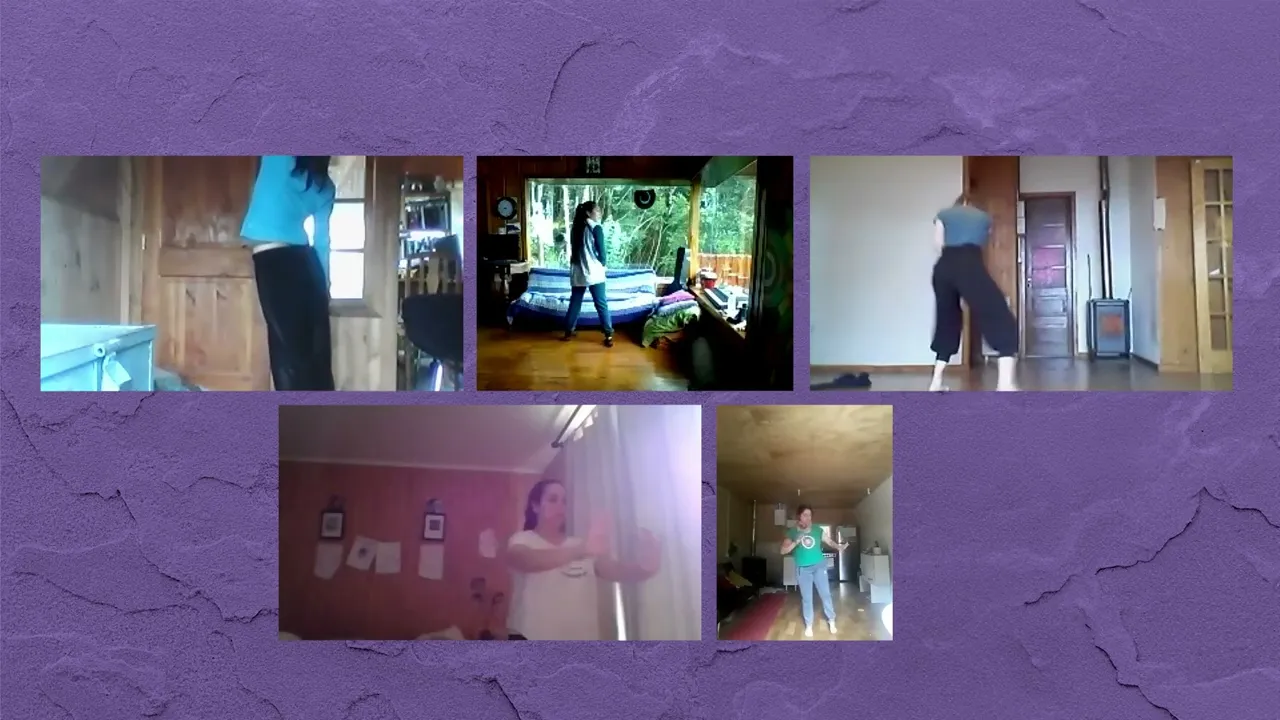
The first phase of this cycle explores parar as stopping in order to perceive what moves when we stop. Stopping is understood not as an endpoint, but as a way of attuning attention and perception to the moment. By interrupting movement or temporal flow, this phase of the cycle creates an opportunity to notice what might otherwise remain unnoticed. In this way, parar becomes a generative act: an opening rather than a closure, from which possibilities can emerge and take shape through movement.From this attention, the next phase is to follow what parar suggests: not to rush past what is unfolding, but to deepen the relations emerging. In this sense, parar begins to open towards building up. This phase introduces saborear (to taste or savour), bringing a sensory quality to the practice. Within this research, I bring saborear into relation with saber (to know), proposing a shift from the demand to know what is happening towards tasting and sensing what is unfolding. Rather than seeking to define or understand immediately, the practice invites us to saborear: to stay with what is emerging and attend to its different qualities.The following phase invites us to stay with the stop/parar a little longer and attend to what comes after the immediate. Rather than following only the first possibility that appears, the practice offers time for a second, a third, and further possibilities to emerge, allowing the moment to remain flexible, permeable and attuned, with different sabores (flavours) emerging along the way. Through this extended attention, the phase opens up shifts in temporal perception.
Mobilising questions
What moves when we stop/paramos?
What emerges if I stay a little longer?
Practice propositions
Stay with that parar and immerse yourself in its movement.
Follow what parar suggests.
Parar un momento
by
Andrea Torres Viedma
Compartir
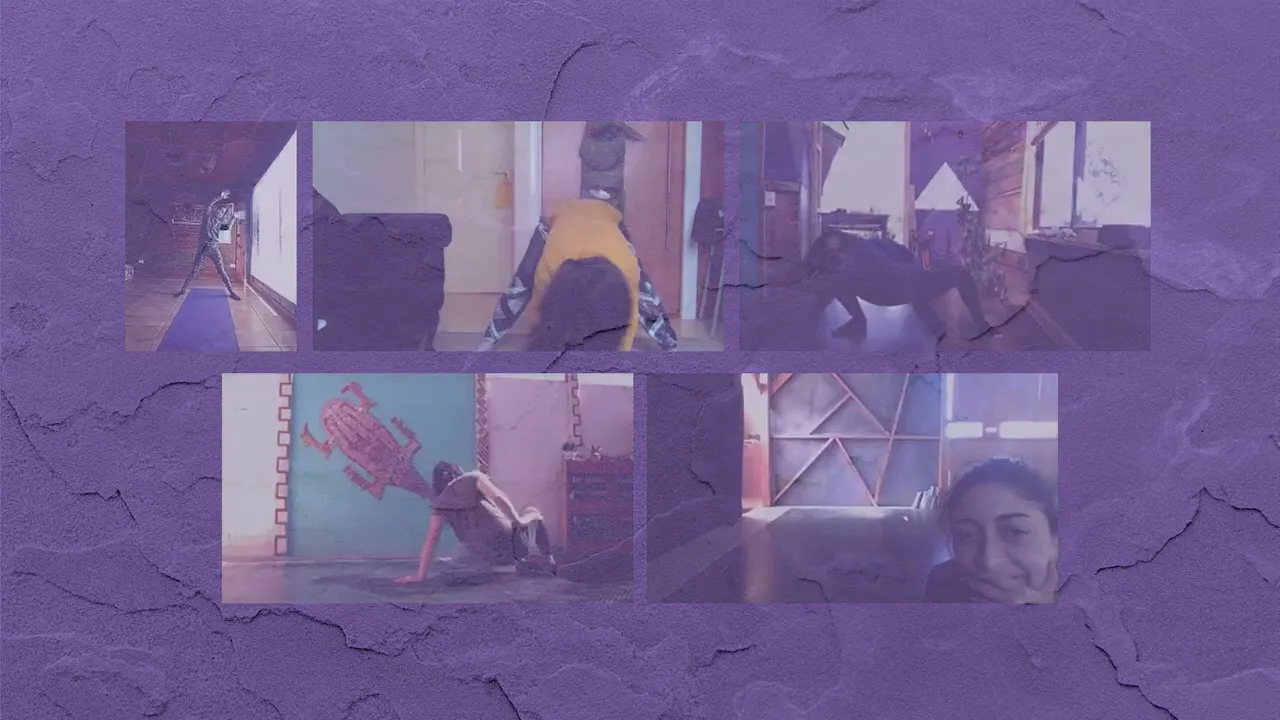
This cycle is grounded in the notion of compartir (to share). Within the practice, compartir is split into com-partir and rearranged as partir-com. In Chilean Spanish, partir carries several meanings: it can refer to dividing something into parts—as in partir una torta (to cut a cake)—but also to starting or leaving. Com, meanwhile, evokes with, together and the common. This wordplay opens up compartir towards both beginning and departing together: starting something in common while also, in the context of this project, moving away from dominant experiences of time towards a temporality that emerges through sharing.Following the cycle of Parar, this phase unfolds through entering and leaving. Beginning from outside, participants enter the space and find where and how to position themselves through parar as stopping. After attending to the moment that emerges, they leave, taking some distance from it. This process is repeated, gradually incorporating other aspects explored through parar: immersing into the movement of the moment and attending beyond what is immediate.In the next phase of the cycle, after exploring individually, participants take turns sharing. One person shares a moment through parar in its phase as stopping, while the others witness it. Those who have witnessed are then invited to enter the moment that was shared, bringing with them what remains from what they perceived. Once they have found their way into the parar that was shared, they explore parar in its phase of building up, through immersion in the moment and attention beyond what is immediate. In this way, participants encounter and explore another person’s parar through a moment that is shared, yet diverse. At the same time, the person who first shared the moment witnesses its multiple unfoldings as embodied by the other practitioners.Alongside the questions and invitations of Parar, this cycle introduces:
Mobilising Question
What stays with me from the moment shared?
Practice propositions
Enter and parar un momento / Enter and stop for/build up a moment.
Leave and take some distance.
Parar un momento
by
Andrea Torres Viedma
Retornar
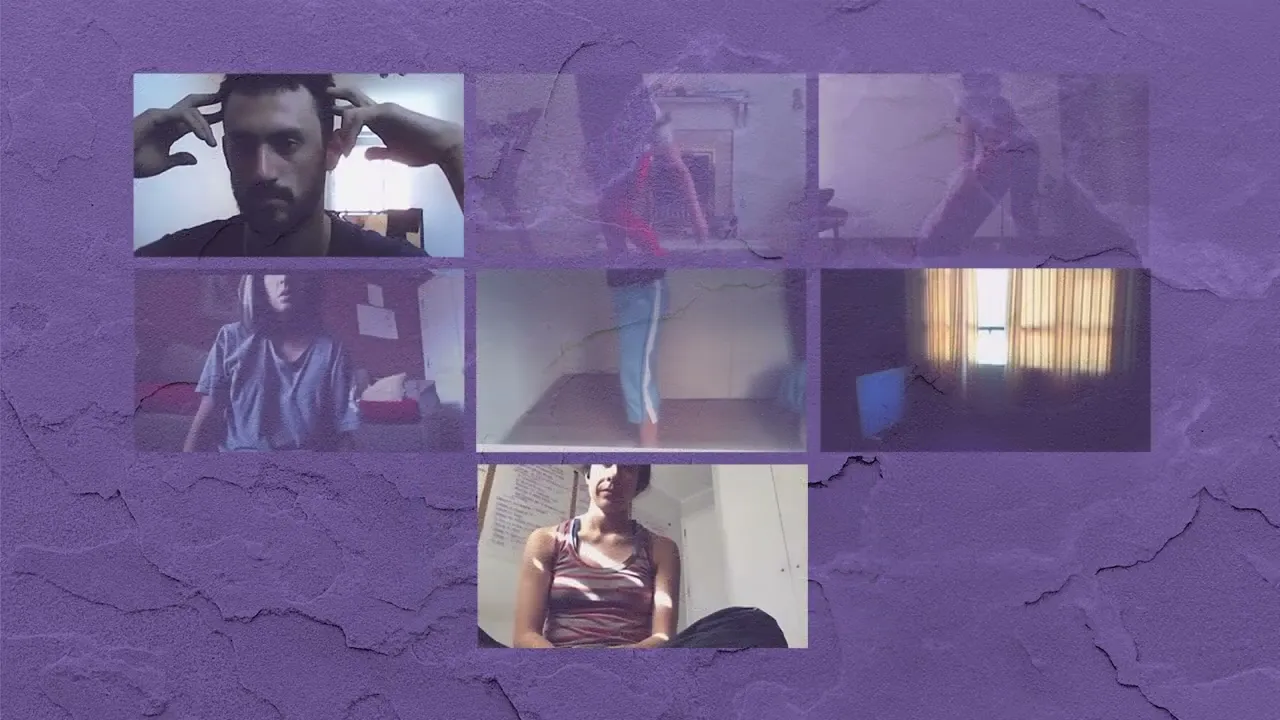
Building on Parar and Compartir, this cycle introduces Retornar (to return)—not as simply going back to what was before, but as returning with the possibility of difference. Each return is shaped by what remains from previous moments while also being transformed by what is happening in the present. In this sense, retornar becomes a re-turn: a return through which something can be encountered and articulated anew.As in Compartir, the cycle unfolds through entering and leaving. Here, however, entering becomes a way of embodying the return. After leaving a moment, participants are invited to enter again, not necessarily in search of a ‘new’ moment, but returning to what remains from before. With each entering, the practice proposes an insistence on returning—staying with, sensing and allowing what remains to unfold differently—until the need for another moment emerges.Through this repeated returning, retornar also becomes a practice of remembering. Rather than attempting to recover what has passed as something fixed or unchanged, the practice attends to its traces: what stays, what moves and what continues to resonate in the present. This insistence on returning creates a way of staying in relation with what might otherwise disappear, while allowing it to transform.Through these re-turns, moments accumulate, shift and resonate with one another. Retornar therefore explores a temporality shaped by recurrence and difference, where returning does not mean repeating the same, but allowing what has already emerged to become otherwise.
Mobilising questions
Where does retornar take me/us?
What emerges through retornar?
What remains and what changes?
Practice proposition
Retornar to sense what stays, what moves, and what still longs to unfold.
Parar un momento
by
Andrea Torres Viedma